Tesla Delays Optimus Robot Deliveries to End of 2027
Musk cites unresolved challenges with dexterous hands and AI generalization as the primary reasons for the new timeline.
By Kendra Konchanuk ·
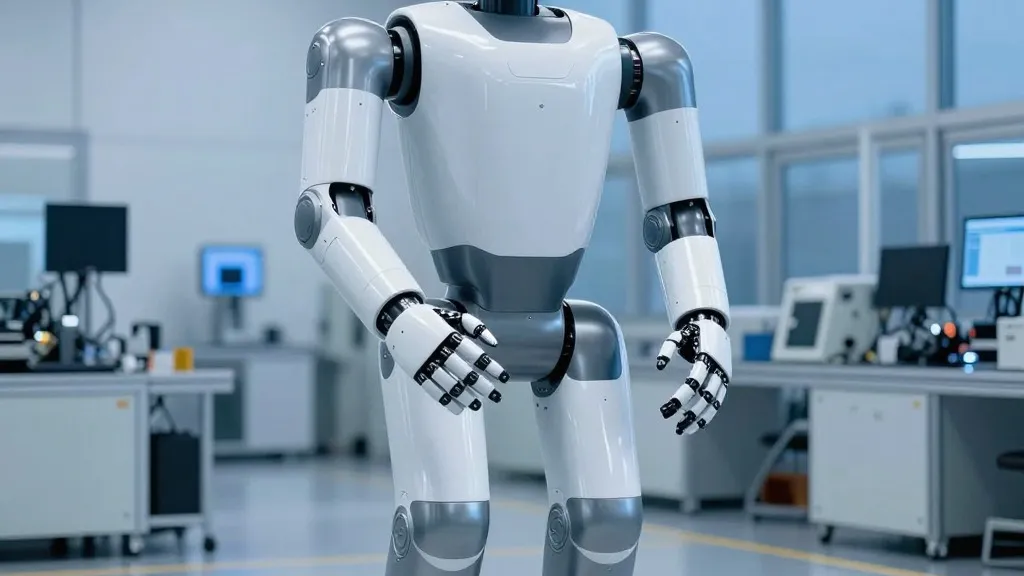
Tesla has officially pushed back the timeline for delivering its Optimus humanoid robots to external customers, targeting late 2027 instead of the previously anticipated 2026. During the Q3 2026 earnings call, Elon Musk explained that while the company has begun early production, critical hurdles remain regarding the robot’s dexterity, durability, and artificial intelligence capabilities. This shift marks another adjustment in a timeline that has repeatedly slipped since the project’s inception.
The core issue, according to Tesla engineers, is the robot’s hand. Musk noted that the fingers must be soft enough to handle delicate objects yet durable enough to withstand constant industrial wear, a challenge complicated by the fact that robots cannot heal like human skin. Beyond the hands, the company is still refining its electromechanical design and custom gears, which currently face reliability concerns. Tesla’s own shareholder letter now describes the units coming off the Fremont line as the first 'production-quality' bots, implying that earlier iterations were not ready for real-world use.
On the software side, Tesla faces a data bottleneck. Unlike its vehicle fleet, which generates vast amounts of driving data for its Full Self-Driving system, the Optimus robot lacks a large network of units in the field to learn from. To address this, the company plans to build between 10,000 and 20,000 robots for an internal 'Optimus Academy' where they will practice tasks. Additionally, Tesla intends to integrate its AI5 chip into the robots around April 2027 to improve processing power.
Production is currently underway at the Fremont factory, utilizing the high-volume line previously dedicated to the Model S and Model X. Although the infrastructure for a million units per year is largely installed, Musk estimates it will take at least a year, and possibly longer, to reach a rate of 20,000 units per week. This is because parts of the design are still in flux. The initial external deliveries are expected to target industrial jobs that are dangerous, repetitive, or require around-the-clock operation.
Musk argued that Tesla is significantly ahead of its competitors, stating that 'there is no one that is even close' to the company on a general-purpose humanoid. However, industry observers point to rivals who have made notable strides. XPeng, for instance, activated an automated production line for its IRON robot in September, with plans for mass production by the end of 2026 and deliveries starting in the first half of 2027. Similarly, Boston Dynamics has begun producing its electric Atlas robot and has committed all its 2026 deployments, including to Google DeepMind and Hyundai’s Metaplant in Georgia.
The competitive landscape is becoming more defined as these companies tackle similar problems. Boston Dynamics, which hired Milan Kovac, Tesla’s former head of Optimus, in January, has adopted a pragmatic approach by prioritizing sturdy grippers for industrial parts over human-like dexterity. This strategy allows them to bypass some of the dexterity issues Tesla is currently facing. Meanwhile, XPeng is running its physical AI model on in-house chips and aims for a European rollout in the second half of 2027.
The stakes for Tesla are high, as the company has promised a video within the next month or two showing Optimus performing unscripted tasks. This demonstration will be crucial in validating Musk’s claims that the robot can generalize to new environments without relying on pre-programmed routines. If the video shows genuine autonomy, it could strengthen investor confidence; if not, it may reinforce the narrative that the timeline is yet to be finalized.
Ultimately, the challenge for Tesla and its competitors is not just building the robot, but making it useful and reliable enough to pay for itself. While Tesla may have the most robots built, the industry is still grappling with the fundamental issues of generalization and long-term reliability. As electricity rates climb and industrial automation becomes more critical, the race to deliver a truly functional humanoid robot is intensifying, with late 2027 emerging as a key milestone for the sector.
Source: Electrek